BEAUTY / EVERYDAY HABITS
Small habits.
Informed choices.
Explore four practical guides, a published before-and-after study and ten trusted starting points for healthier habits.
General education for adults, not individual diagnosis or treatment. For persistent symptoms or an individual treatment plan, consult a qualified clinician.

SKIN-BARRIER CARE
Comfort first. Keep care gentle.
Dryness, tightness and irritation can make a routine difficult to sustain. Start with gentle care rather than adding several new active ingredients at once.
- Keep washing gentle and use lukewarm water; pat the skin dry.
- Apply a fragrance-free cream or ointment while skin is still damp. Choose a texture suited to your skin.
- Avoid products that sting or make irritation worse. Persistent cracking, bleeding or itching deserves assessment by a dermatologist.
What do you notice after cleansing: comfort, tightness, stinging or persistent itch?
SIMPLE SKINCARE
A routine you can actually keep.
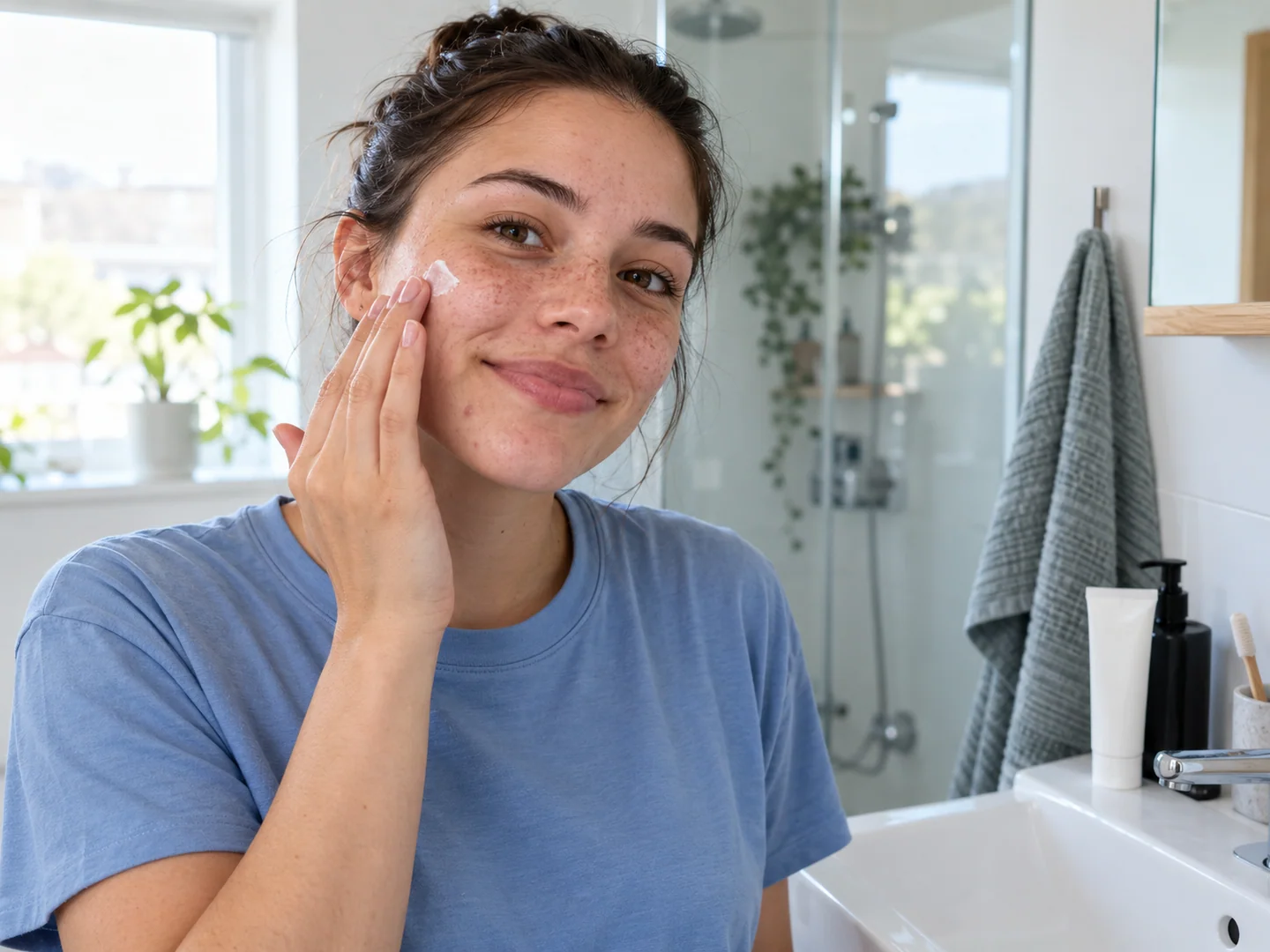
An understandable routine can be more useful than a crowded shelf. The American Academy of Dermatology describes three foundations: cleansing, moisturising and sun protection.
- Cleanse gently before bed. Avoid excessive washing and abrasive scrubbing.
- Use a moisturiser appropriate for your skin and a separate sunscreen or suitable moisturiser with SPF.
- Introduce changes gradually. If acne, rash or irritation persists, seek professional advice rather than escalating products.
Can you explain what every product in your routine is for?

SCALP & HAIR CARE
Care for the scalp. Respect the hair.
Scalp needs and hair texture differ. A good routine considers oiliness, styling, breakage and comfort rather than treating every hair type alike.
- Adjust washing to how oily or dirty your scalp becomes. Apply shampoo mainly to the scalp.
- Use conditioner and detangle gently. Reduce excessive heat and tight, pulling hairstyles.
- Persistent inflammation or sudden, patchy or increasing hair loss calls for a dermatologist. Everyday care is not a substitute for diagnosing hair loss.
Are you trying to manage oiliness, flakes, breakage or actual hair loss?

DAILY SPF
Make protection part of the day.
Sun protection combines shade, clothing and sunscreen. The AAD recommends broad-spectrum, water-resistant sunscreen with SPF 30 or higher for exposed skin.
- Use sunscreen before going outdoors and follow the product instructions. Cover exposed areas, including ears and neck.
- Reapply around every two hours outdoors, and after swimming or sweating, following the label.
- Pair sunscreen with shade and protective clothing. SPF is not a promise of all-day protection or permission to stay in the sun longer.
When you go outdoors, what reminds you to apply and reapply protection?
PUBLISHED STUDY / ORIGINAL PHOTOGRAPHS
Before & after.
Read the evidence behind the image.
These photographs show selected participants at baseline and after three weeks using the study’s ceramide- or niacinamide-containing preparations. They are not NUVELO HEALTH treatment results.
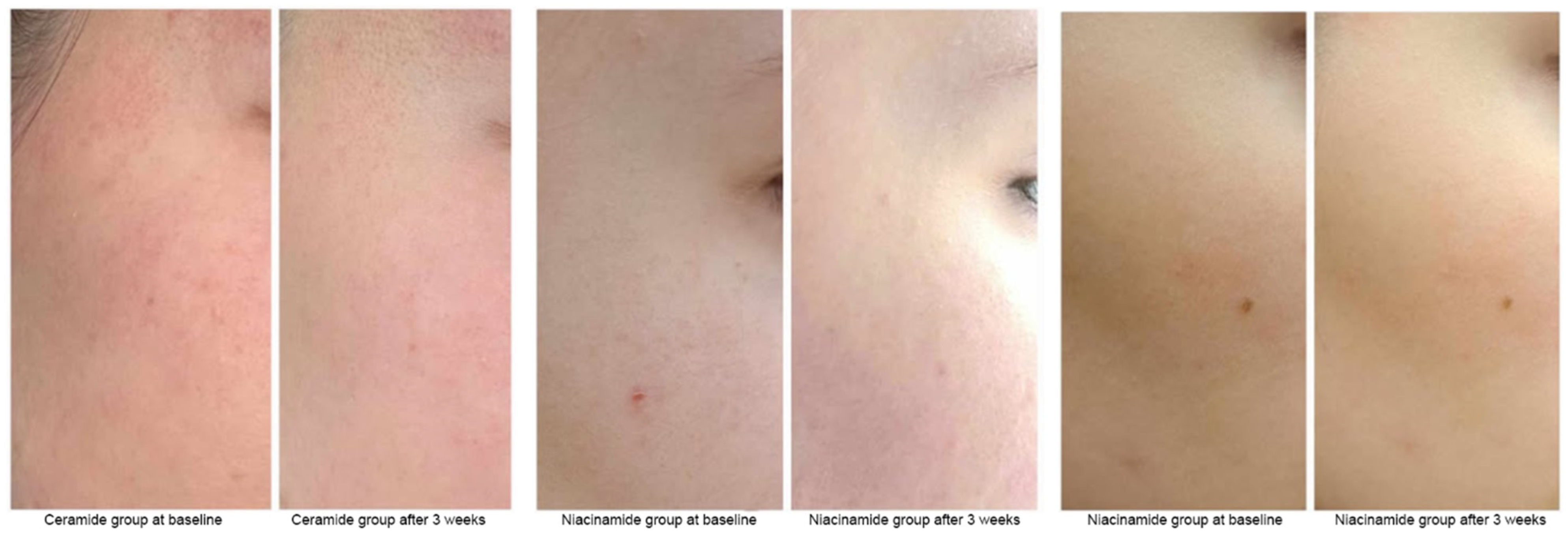
Click the photograph to inspect the original labels at full size. Figure 3 reproduced unchanged from Załęcki, Jezusek & Nowicka, Applied Sciences (2025), 15, 9729. CC BY 4.0 ↗.
What this can — and cannot — show
A small, three-week real-world study in young women. The paper reports no significant between-group hydration difference at the end of the study, and no significant change in skin texture or lesions. Selected photographs cannot establish a typical result or prove that an ingredient works in every formulation.
Read the full study, methods and limitations ↗10 TRUSTED STARTING POINTS
Health habits.
Go straight to the source.
A curated reading list from professional and public-health organisations, rather than a ranking of treatments or products.
Gentle skin care ↗
Start with moisturising and a routine your skin tolerates.
02 / AADKeep skincare simple ↗
Cleanse, moisturise and protect; assess the purpose of extra products.
03 / AADCare for scalp and hair ↗
Match washing, conditioning and styling to your hair type.
04 / AADProtect exposed skin ↗
Combine sunscreen, shade and protective clothing.
05 / WHOMove regularly ↗
Build physical activity into daily life and reduce sedentary time.
06 / WHOEat a varied diet ↗
Explore guidance on vegetables, fruit, pulses, whole grains and healthier food choices.
07 / CDCPrioritise sleep ↗
Use a regular schedule and enough sleep for your age.
08 / WHOAvoid tobacco ↗
Understand tobacco risks and the value of quitting support.
09 / WHOReduce alcohol-related harm ↗
Understand that alcohol carries health risks.
10 / NHSMake time for connection ↗
Relationships, learning and everyday activity can support wellbeing.
Links reviewed 20 October 2026. Guidance may vary with age, pregnancy, medical conditions and local advice.